Web offset printing is offset printing that runs on a continuous roll (“web”) of paper instead of individual sheets. The paper unwinds from a large reel, passes through the printing units at high speed, and is cut into pages at the end. It’s built for very high volumes — newspapers, magazines, books and directories — where speed per hour matters more than anything. For most commercial print shops, though, sheetfed offset (printing on pre-cut sheets) is the right choice. Here’s the difference and how to decide.
Web offset vs sheetfed offset
| Web offset | Sheetfed offset | |
|---|---|---|
| Paper form | Continuous roll (reel) | Pre-cut sheets |
| Speed | Very high (huge volumes/hour) | Moderate, flexible |
| Best for | Newspapers, magazines, long-run books | Brochures, cartons, commercial, short/medium runs |
| Job flexibility | Lower — set up for long runs | High — easy job changes |
| Quality on premium stock | Good for news/mag stock | Excellent on coated/board |
| Typical buyer | Publishers, large plants | Most commercial & packaging printers |
How web offset works
A reel of paper feeds continuously into the press. The web runs through the printing units (often printing both sides at once — “blanket-to-blanket”), then through a dryer on heatset lines, and finally into a folder that cuts and folds the web into finished signatures or pages. Because the paper never stops, web presses achieve output that sheetfed can’t match on long runs — which is exactly why newspapers use them.
There are two broad types: coldset (no dryer — newspapers on uncoated stock) and heatset (with a dryer — magazines and catalogues on coated stock).
How sheetfed offset works
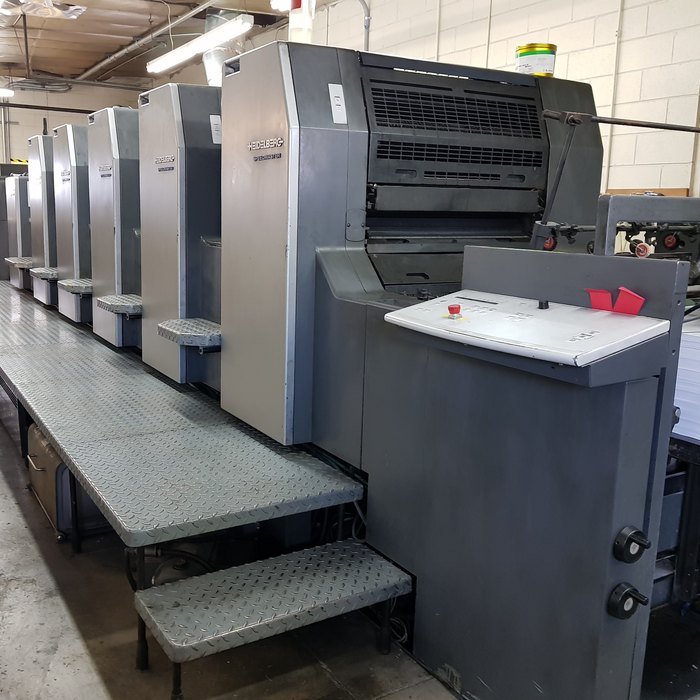
A sheetfed press feeds one pre-cut sheet at a time from a feeder pile, prints it through the colour units, and delivers it to a stack. It’s slower per hour than web but far more flexible — you can change jobs, stocks and sizes quickly, and print on heavy board for packaging. This flexibility is why the vast majority of Indian print shops run sheetfed Heidelberg and Komori presses.
Which one do you need?
Choose web offset if you print newspapers, high-circulation magazines, or very long book runs — volumes in the hundreds of thousands where speed per hour is everything.
Choose sheetfed offset if you do commercial printing (brochures, catalogues, stationery), packaging and cartons, or short-to-medium runs with frequent job changes. For almost every general and packaging printer, sheetfed is the answer.
A note on cost and used machines
Web presses are large, specialised installations. Sheetfed presses are far more common on the used market and suit most businesses — a used sheetfed Heidelberg or Komori is the standard route for a commercial or packaging shop. If you’re weighing colours on a sheetfed press, see 2 colour vs 4 colour printing, and for real numbers see our used offset machine price guide.
Still deciding?
Tell us what you print and your expected volumes, and we’ll tell you honestly whether you need web or sheetfed — and shortlist the right used machines if sheetfed is the fit.
📱 Ask us on WhatsApp → | Browse machines in stock
Info