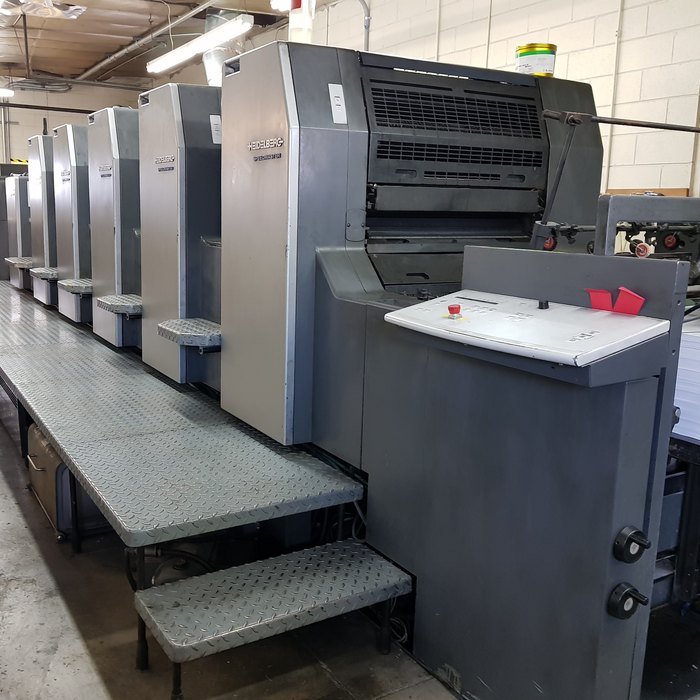
You can start a small offset printing press in India for roughly ₹8–15 lakh, or a full-colour commercial setup for ₹25–40 lakh, depending mainly on the press you buy. The machine is the biggest cost — and buying a good used press instead of new is what makes starting affordable. Here’s a realistic, line-by-line breakdown so you can plan your investment.
The main costs of starting a printing press
| Item | Lean start (2-colour, used) | Commercial start (4-colour, used) |
|---|---|---|
| Offset press (used) | ₹3–8 lakh | ₹12–20 lakh |
| Pre-press (CTP / plates / DTP) | ₹1–3 lakh | ₹3–6 lakh |
| Finishing (cutter, folder) | ₹1–2 lakh | ₹3–5 lakh |
| Space deposit & setup | ₹1–2 lakh | ₹2–4 lakh |
| Power connection & wiring | ₹0.5–1 lakh | ₹1–2 lakh |
| Working capital (paper, ink, salaries) | ₹2–3 lakh | ₹4–6 lakh |
| Approx. total | ₹8–15 lakh | ₹25–40 lakh |
Figures are indicative for 2026 and vary by city, scale and how much you buy used vs new.
1. The printing machine (your biggest decision)
The press determines both your cost and what work you can take. A used machine is the single biggest saving: a new full-size four-colour press can cost several crore, while an inspected used Heidelberg or Komori does the same work for ₹12–20 lakh. See real prices on our used offset machine price guide.
Choosing colours: a 2-colour is enough for stationery and job work; a 4-colour opens brochures, packaging and magazines. We break down the choice in 2 colour vs 4 colour printing.
2. Pre-press
You need a way to make plates: a CTP (computer-to-plate) unit for a commercial setup, or outsourced plate-making when starting lean. Add a basic DTP/design computer with proper software. Many start-ups outsource CTP initially to save capital and bring it in-house once volume grows.
3. Finishing equipment
A paper cutting machine is essential; a folding machine, and later lamination and binding, depend on your product mix. Used finishing equipment keeps this line affordable — and we can help source it alongside your press.
4. Space, power and utilities
An offset shop needs a ground-floor space that can take the machine’s weight and vibration, with room for paper storage and material flow. Power is a real cost: a full-size press needs a solid three-phase connection, and you should budget for a stabiliser and, ideally, backup. Factor rent deposit, basic civil work and wiring.
5. Staff
At minimum you need a trained press operator (a good operator is worth paying for — they protect your machine and your quality), a helper, and someone for design/pre-press and accounts. Salaries are part of your working capital until revenue stabilises.
6. Working capital
Don’t forget the money to actually run: paper, ink, chemicals, plates, power bills and salaries for the first few months before customer payments come in. Under-budgeting working capital is the most common reason new presses struggle — keep 3–6 months in reserve.
How to start lean
- Buy a good used press instead of new — the biggest single saving.
- Start with 2-colour if your initial work is stationery/job work; upgrade to 4-colour as demand grows.
- Outsource CTP and some finishing at first; bring it in-house with volume.
- Buy inspected, from a dealer who installs — a cheap machine that won’t run costs far more than it saves.
Ready to price your setup?
Tell us the work you plan to print and your budget, and we’ll recommend the right used press and finishing line — and give you exact machine prices so you can build a real plan.
📱 Plan your press on WhatsApp → | See used machines in stock
Info